Why Pedal Order Matters More Than You Think
Put a fuzz pedal after a tuner pedal — a tuner with a buffered bypass — and your fuzz will sound thin, buzzy, and wrong. Swap them, fuzz first, and suddenly it blooms. Same pedals, same settings, completely different sound. That's pedal order.
Here's the core principle: each pedal in your chain processes whatever signal comes into it. A delay pedal after an overdrive means your echoes are clean repeats of a distorted signal. An overdrive after a delay means your delay repeats get driven and compressed alongside the original signal. Neither is wrong — but they sound radically different, and only one of them is what you actually want.
Pedal order isn't arbitrary. There's a logic to the standard sequence that's been refined by decades of players figuring out what works. Most signal chain recommendations exist for a specific electrical or tonal reason. Understanding the "why" means you can break the rules when it serves your music — and recognize when you're breaking them by accident.
The Standard Guitar Signal Chain
This is the baseline that most touring and studio guitarists use as their starting point. Position numbers aren't rigid — they're zones. The fuzz goes before the overdrive. The delay goes after the modulation. The specifics within each zone are yours to explore.
1. Guitar → Tuner / Utility
Your tuner goes first — or more precisely, it goes before anything that could affect your pitch reading. A tuner seeing an already-distorted signal reads poorly. Seeing clean signal straight from the guitar reads accurately.
There's a more important reason to think about what goes first: anything with a buffered bypass in the first position will affect every pedal downstream. A buffer converts your guitar's high-impedance signal to low-impedance. Most of the time, that's a good thing — it preserves your signal over long cable runs. But for one type of pedal, it's a deal-breaker.
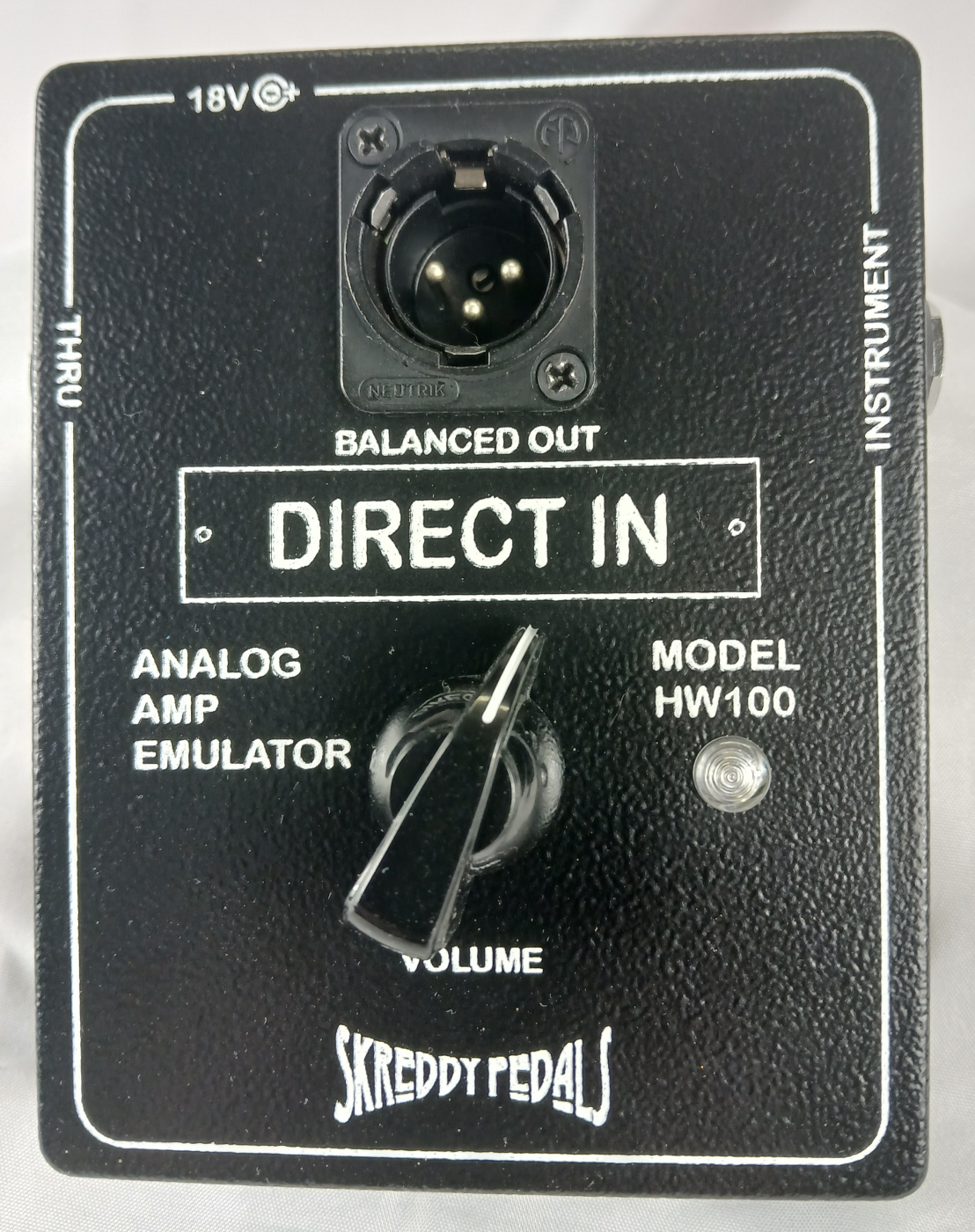
The Skreddy Direct In ($349.95) pulls double duty here when you're recording or playing direct. Used as a first-position DI with its thru jack, it routes your signal to a PA or interface simultaneously with your pedalboard signal — the cleanest way to capture a parallel direct and wet signal simultaneously.
2. Fuzz — Always Before Buffers
This is the most important rule in the entire signal chain, and violating it is the most common mistake beginners make.
Vintage-style fuzz circuits — Fuzz Faces, Tonebenders, and most boutique fuzz pedals — are designed to see your guitar's raw, high-impedance pickup output. When a buffer comes before them, it converts that signal to low-impedance, and the fuzz circuit sounds completely different: thinner, buzzier, more compressed, and less expressive. The volume-knob cleanup that makes a Fuzz Face musical? Gone when there's a buffer in front of it.
This is called the "fuzz first" rule. It's not a preference — it's physics.
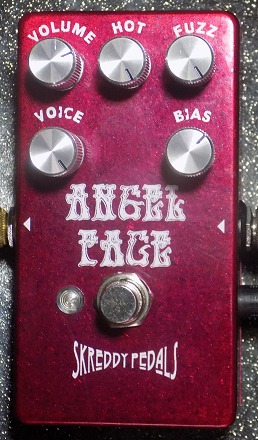
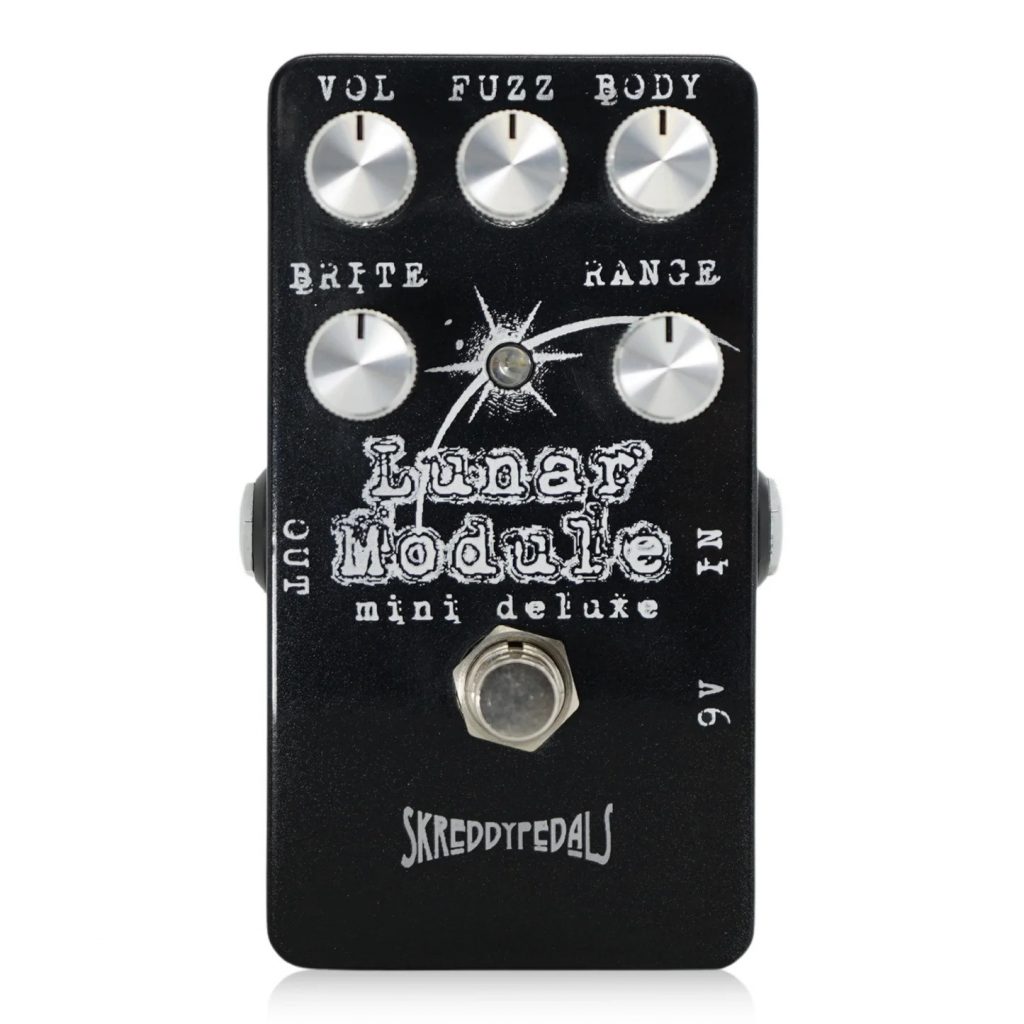
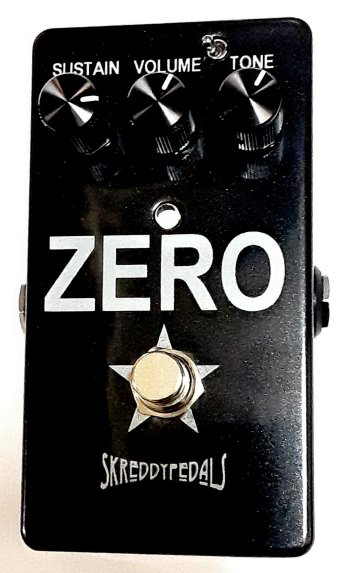
Skreddy fuzz pedals are built with this in mind. The Lunar Module Mini Deluxe ($301) and ZERO ($385) both perform at their best seeing guitar pickups directly, no buffer in the way. The Angel Face ($259) — a Fuzz Face-style circuit specifically voiced for humbuckers — is especially sensitive to buffer placement. Put it first, or use a true-bypass looper to take your buffer-equipped pedals out of the signal path when the fuzz is engaged.
For a deeper look at why silicon transistors affect this interaction, see: Why Germanium vs Silicon Matters in Your Fuzz Pedal.
Fuzz pedal recommendations by style:
- Warm, dynamic Fuzz Face sounds (blues, classic rock): Angel Face ($259) — voiced for humbuckers
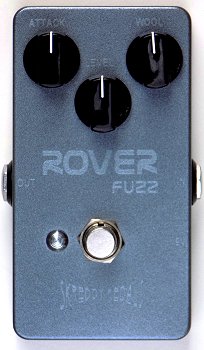
- British Tonebender aggression (Zeppelin, garage rock): ROVER Fuzz ($205) — Tonebender MkII
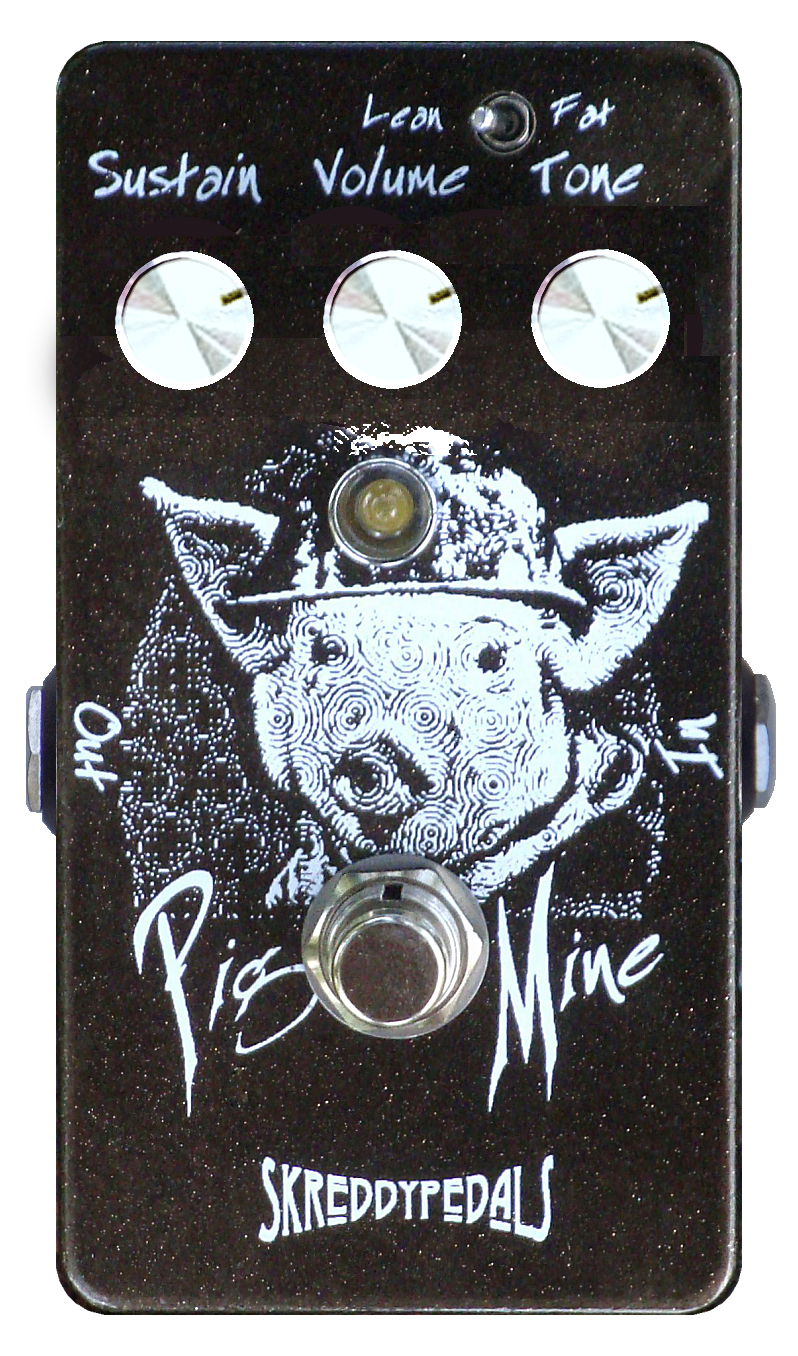
- Sustaining Big Muff thickness (Pink Floyd, shoegaze): Pig Mine ($259) — smooth yet aggressive
- Boutique versatility (desert island pick): Lunar Module Mini Deluxe ($301) — "the best dirt pedal ever made"
- Maximum aggression (alt rock, grunge, stoner): ZERO ($385) — the most cutting fuzz in the lineup
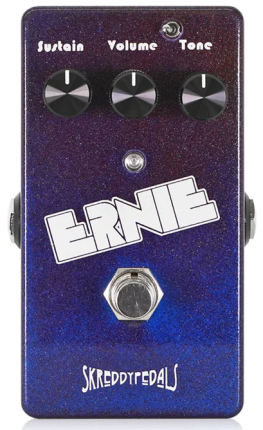
- Fat vintage (60s soul, slow blues): Ernie ($385) — fat, round, soulful
3. Overdrive / Distortion
Overdrive goes after fuzz for a specific reason: fuzz circuits are notoriously sensitive to their input impedance. A buffered overdrive before a fuzz will ruin the fuzz response (see above). But there's a second reason: stacking a low-gain overdrive after a fuzz adds thickness and harmonic density without destroying the fuzz character. The fuzz provides the fundamental tone; the overdrive adds body and presence.
The reverse — overdrive before fuzz — pushes a hot signal into the fuzz, often causing it to gate and cut out. That's occasionally a useful effect (gated fuzz sounds are intentional in some styles), but it's almost never what you want by accident.
For players running overdrive-only setups (no fuzz), the overdrive simply takes first position after the tuner.
Overdrive recommendations:
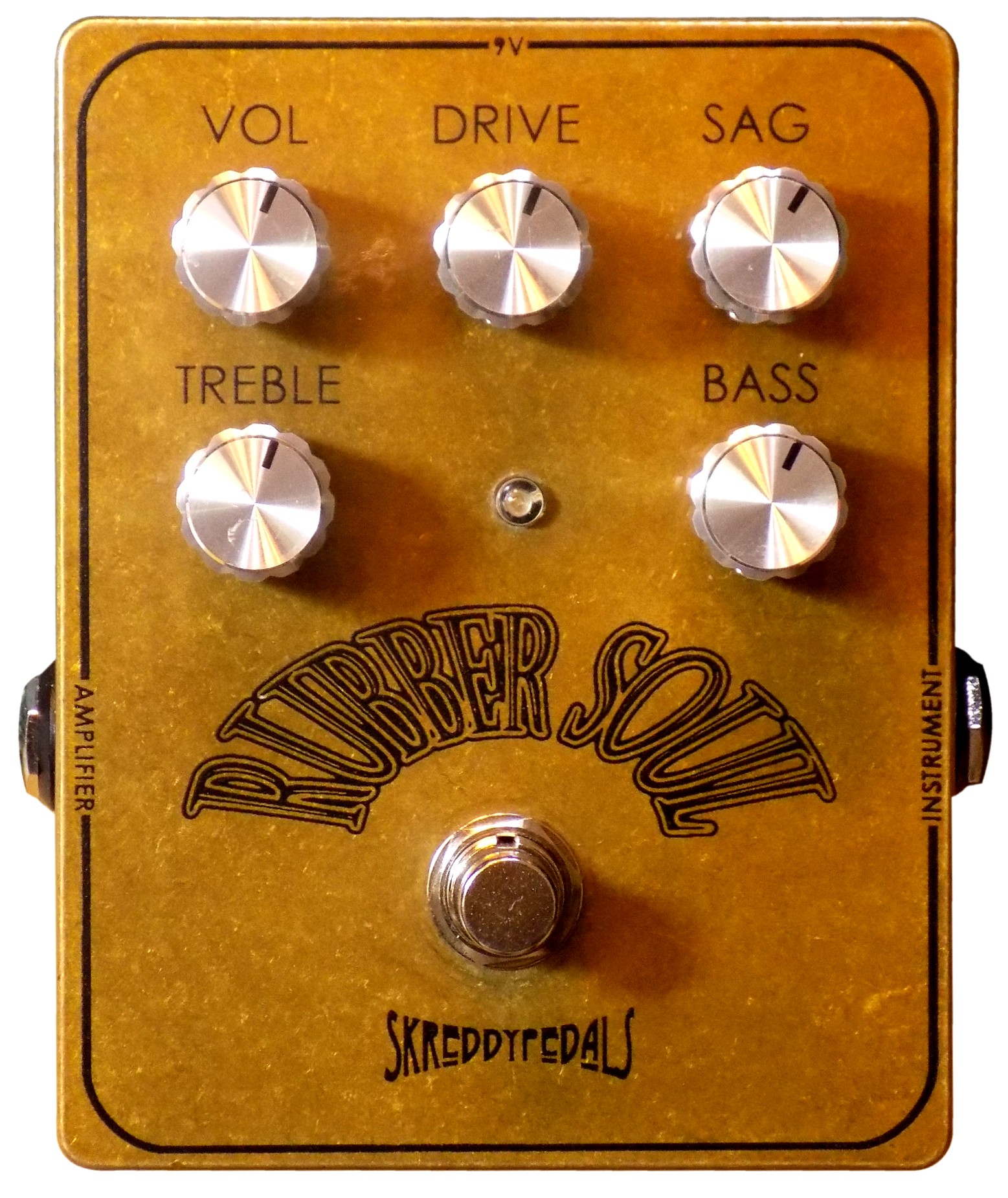
- Jangly, glassy British combo (Beatles-era Vox, mod rock): Rubber Soul ($290) — the AC30 sweet spot
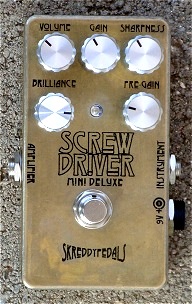
- Touch-sensitive tweedy warmth (country, blues, Nashville): Screw Driver Mini Dlx ($301) — backed-off Tweed character
4. Boost
Boost placement is intentional and context-dependent. Two different positions do two different things:
Boost before drive: Pushes a hotter signal into your overdrive or fuzz. Results in more gain, more sustain, and more saturation from the drive pedal downstream. Good for pushing a mild overdrive into crunch territory without touching its gain knob.
Boost after drive: Raises the overall output volume without adding more distortion. Good for solos — same tone, just louder. Also useful for increasing amp breakup without adding pedal gain.
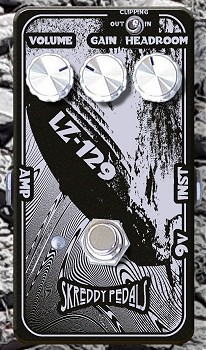
The LZ-129 ($235) — based on the circa-1969 Univox Uni-Drive used by Jimmy Page — is a dirty boost with a headroom control. Placed after drive pedals, it adds presence and authority to solos. Placed before an overdrive, it pushes the downstream circuit into more natural saturation. Most players find it most useful as a solo boost at the end of the drive section, just before modulation and time-based effects.
5. Modulation (Phaser, Chorus, Vibrato, Tremolo)
Modulation goes after your dirt — fuzz, overdrive, boost — and before your time-based effects (delay, reverb). The reason is simple: you want your modulation to be echoed by your delay, not the other way around. A phaser before a delay creates swirling, evolving repeats where each echo has slightly different phase. A delay before a phaser processes the entire delay trail through the modulation effect, which produces a stranger, more washed-out result.
Exception: tremolo before delay can sound good intentionally. The rhythmic volume chopping of the tremolo gets echoed, creating a polyrhythmic layered effect. That's a specific creative choice, not a general rule.
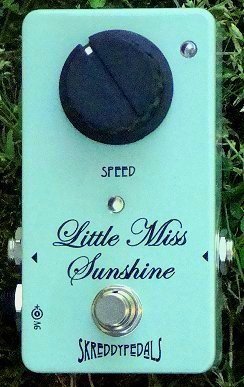
The Little Miss Sunshine ($301) — Skreddy's classic optical phaser — belongs in this slot. It produces the swooshing, vintage-character phaser sound of mid-70s records: Van Halen I, Led Zeppelin Physical Graffiti, David Gilmour's later Pink Floyd work. Run it with medium-depth and slow rate for a subtle, always-on shimmer; crank the depth for dramatic sweeps.
6. Delay
Delay near the end of the chain, after all your drive and modulation. The reason: delay captures your processed signal — with all the color and character of your fuzz and overdrive — and repeats it cleanly. Those repeats decay naturally without being further processed by other effects. If you run delay before overdrive, every echo gets a fresh distortion hit, which turns into noise and mud quickly.
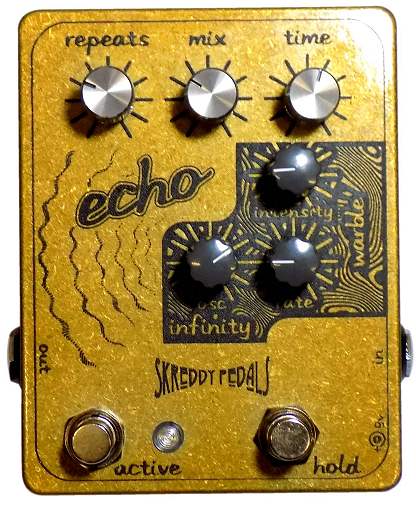
The Echo Infinity ($338) sits in this slot. Tape-like repeats with a standard mix control and an "infinity" feedback mode for ambient swells. For signal-chain purposes, all that matters is placement: after modulation, before reverb (if you have one), before your amp or direct output.
7. Reverb / Amp / Direct Out
Reverb is last. It processes the entire signal — fuzz, overdrive, modulation, delay — and adds spatial depth around it. Running reverb before delay creates reverb tails that then get echoed and multiplied into a wash. That's usually too much. Reverb last gives you a sense of space without dominating the signal.
If you're recording or playing direct, the Direct In ($349.95) functions as the final stage: an analog amp emulator (Hiwatt-voiced) that adds the speaker response and harmonic character of a real tube amp before the signal hits your interface or PA. For the complete recording setup, see: Best Pedals for Recording Direct to DAW.
The Complete Visual Order
The Four Most Common Signal Chain Mistakes
1. Buffer Before Fuzz
Already covered above, but worth repeating because it's the mistake that derails the most beginners. Any pedal with buffered bypass — and that includes most Boss pedals, most Line 6 pedals, and most inexpensive digital tuners — converts your signal to low-impedance before passing it on. Fuzz Face and Tonebender-style circuits hear that low-impedance signal and lose their expressiveness immediately.
The fix: place your fuzz first, before any buffered pedals. Or use a true-bypass looper to keep the buffer out of the chain when the fuzz is on. Or use a fuzz with its own internal buffer designed for exactly this purpose.
2. Too Many Gain Stages
More gain pedals don't produce more tone — they produce more compression and less clarity. Stacking fuzz into overdrive into distortion into a cranked boost produces a thick, indistinct wall that loses all picking dynamics and note definition.
The best stacked sounds come from pairing a low-gain stage with a higher-gain stage, not two high-gain stages. A Rubber Soul (low-gain overdrive) after a Lunar Module (fuzz) is a usable, harmonically rich combination. A ZERO into a Top Fuel into a Super 100 at full gain is mud.
Rule of thumb: if you need to hear the individual notes in a chord, you have too much gain.
3. Delay Before Overdrive
This produces cloudy, indistinct echoes that get progressively more distorted on each repeat. It works in very specific contexts (psychedelic wash sounds) but is wrong for almost everything else. If your delay sounds muddy and your chords are blurring together, check whether your delay is early in the chain.
4. Ignoring Impedance on the DI
If you're running a direct setup — no amp, plugging your pedalboard straight into an interface or PA — the impedance of your final output matters. A standard instrument cable input on an audio interface expects high-impedance signal. A line input expects low-impedance. Plugging the wrong level into the wrong input produces thin, weak tone or clipping.
Analog amp emulators like the Direct In handle this correctly by design — they output a speaker-level signal with the right impedance for professional audio equipment. Going straight from a fuzz into an instrument input on a cheap interface skips the amp emulation and misses the most important part of the tone equation.
Three Example Pedalboards
Budget Board (~$495): The Essentials
Two pedals, no compromises on the positions that matter most. Fuzz and overdrive — the core of any guitar tone.
| Position | Pedal | Price |
|---|---|---|
| Fuzz | ROVER Fuzz — Tonebender MkII | $205 |
| Overdrive | Rubber Soul — British combo sound | $290 |
This covers classic rock to British invasion. The ROVER handles all the Zeppelin, Stones, and early psych territory; the Rubber Soul adds the jangly, glassy AC30 character when you want less aggression and more texture. Together they cover more tonal ground than boards three times this size.
Mid-Range Board (~$795): Gain + Boost
Add a third gain stage — this time a boost for solos and amp push — and you have a complete drive section that handles any gig.
| Position | Pedal | Price |
|---|---|---|
| Fuzz | Pig Mine — Pink Floyd-voiced aggressive sustain | $259 |
| Overdrive | Screw Driver Mini Dlx — tweedy touch-sensitive OD | $301 |
| Boost | LZ-129 — Jimmy Page's dirty boost | $235 |
The Pig Mine into the Screw Driver is a legitimate combination: the fuzz provides thickness and sustain while the overdrive adds definition and warmth. The LZ-129 after both gives you a volume jump for solos without adding more gain to an already-saturated signal. This board handles everything from clean (bypass everything) through classic rock to heavy psych.
Dream Board ($1,814): The Full Rig
All six positions covered. Every effect type, purpose-built pedal at each slot.
| Position | Pedal | Price |
|---|---|---|
| Fuzz | Lunar Module Mini Deluxe — considered by some the best dirt pedal ever | $301 |
| Overdrive | Rubber Soul — British combo overdrive | $290 |
| Boost | LZ-129 — vintage dirty boost | $235 |
| Modulation | Little Miss Sunshine — classic 70s optical phaser | $301 |
| Delay | Echo Infinity — tape-like delay with infinity mode | $338 |
| Direct Out | Direct In — analog Hiwatt amp emulator | $349.95 |
This is a complete, self-contained rig. The Lunar Module's range alone covers everything from gritty edge-of-breakup to face-melting sustain; the Rubber Soul adds AC30-character overdrive for the positions where you want less aggression; the LZ-129 gives you clean solo headroom; the Little Miss Sunshine adds movement; the Echo Infinity gives you space; the Direct In means you can leave the amp at home. No weak link, no gap in the tonal range.
Recording Signal Chain vs Live Signal Chain
The order stays the same in both contexts. What changes is the final stage and how you handle the output.
Live: Your signal chain ends at the amp input. The amp provides the speaker simulation, the room, and the volume. The Direct In can still be used in live contexts — its thru jack passes signal to your amp while simultaneously sending a line-level signal to the PA, giving the front-of-house engineer a clean, amp-emulated direct signal that doesn't rely on microphone placement.
Recording: Your signal chain ends at the Direct In, which goes into your audio interface. This is where signal chain order becomes especially important — because every choice you make is captured permanently, and you can't fix wrong pedal order in post. Fuzz first. Delay after modulation. Direct In last.
One technique worth adopting immediately: capture a parallel dry DI signal alongside your processed signal. The Direct In's thru jack makes this straightforward. Send the thru output to a second input on your interface, and record a completely dry signal alongside your processed track. If the processed tone doesn't sit right in the mix, you can re-amp or reprocess the dry track without re-tracking the performance.
For the full breakdown of recording signal chains, direct rigs, and amp emulators: Best Pedals for Recording Direct to DAW. For the philosophy behind going ampless: Recording Direct: Why You Might Not Need an Amp.
If you're still building your fuzz vocabulary before committing to a signal chain order, start here: How to Choose Your First Fuzz Pedal. All Skreddy pedals ship direct from Carson City, Nevada. Built by hand, one at a time.
Pedals Mentioned in This Article