The Component That Changes Everything
Every fuzz pedal on the planet boils down to transistors doing violence to your guitar signal. The type of transistor — germanium or silicon — is the single biggest variable in how a fuzz sounds and feels under your fingers.
This isn't marketing fluff. It's physics. And understanding the difference will save you hundreds of dollars and hours of frustration chasing "that sound."
Germanium: The Vintage Warmth
Germanium transistors were the first semiconductor devices used in guitar effects, starting in the early 1960s. They were used because they were all that was available — not because someone decided they sounded better.
But they do sound different. Germanium transistors have several characteristics that affect tone:
- Lower gain — They amplify less aggressively, producing a warmer, more natural overdrive quality
- Softer clipping — Some of the earliest fuzzes were designed with intentionally BAD biasing (biasing is what turns the transistor "on") in order to create their distortion, but due to the "leaky" nature of the early germanium transistors, they basically self-biased by internally leaking current even though they shouldn't. This meant that the nasty-sounding circuits would still "work" and even sound reasonably cleanish rather than totally unusable.
- Temperature sensitivity — Their behavior changes with heat, which is why vintage germanium fuzzes sound different at soundcheck vs. on stage
- Faster guitar volume cleanup — Being self-biasing along with draining the input signal more aggressively to ground means that they "clean up" with less reduction in guitar volume and to a much cleaner degree
- Unit-to-unit inconsistency — No two germanium transistors measure the same, so every pedal built with them sounds slightly different. Many are also inherently noisy, adding hiss and hum that silicon devices avoid entirely
The result is a fuzz that feels alive. It responds to your picking dynamics, cleans up beautifully when you roll back your guitar volume, so theoretically a guitarist could just use one fuzz pedal on all the time and use the guitar volume to regulate the amount of clean or fuzz on the fly. But this is not only a feature but also a curse. You cannot rely on a vintage fuzz to provide a consistent sound, and especially when starting out a song, it can be awkward trying to fiddle with the guitar volume while playing something so you can tell if it is set up to get the sound you need.
Here's the clever workaround: Marc at Skreddy Pedals uses carefully selected lower-gain silicon transistors in his versions of these classic germanium circuits and then dials in the optimal bias voltage so they remain in their operating range without requiring leakage to work correctly. The result captures the warmth, dynamics, and touch-sensitivity that made the originals legendary — without the temperature instability, the unit-to-unit inconsistency, or the noise floor problems. You get something very close to the germanium experience but with silicon reliability.
The Tonebender Heritage
The original Tonebender circuits — Mk1, Mk1.5, and Mk2 — all used germanium transistors. These pedals defined the sound of 1960s British rock.
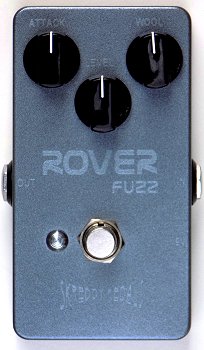
The ROVER Fuzz captures the Tonebender MkII sound with modern reliability. High gain, tons of sustain, and that unmistakable British fuzz character — without the temperature drift problems of a 60-year-old original.
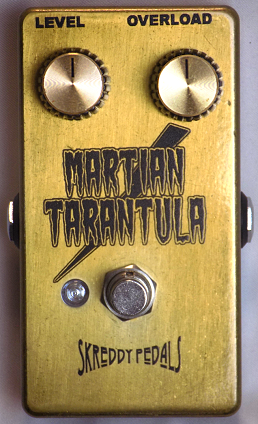
The Martian Tarantula goes even further back, capturing the Mk1 — the rarest and most aggressive Tonebender variant. Spitty, gated, and full of character. This is the raw, ragged sound that launched psychedelic rock. What Marc at Skreddy Pedals has done to his silicon version of this classic fuzz is he fixed the problem of it needing to have leaky transistors in order to bias correctly and then changed the design of the "attack" control into a coherent system that offers 3 distince voicings: At counter-clockwise, it is thin and cold-biased and gated. Throughout the center region, it is well biased and full sounding. And at clockwise it becomes extra fat, saggy, and a bit woofy and again slightly gated but in a very different way compared to the voltage-starved sound at counter-clockwise. So you get different classic fuzz natures all available through that one control knob.
The Fuzz Face World
The Fuzz Face is the other great germanium circuit. Where Tonebenders are aggressive and forward, germanium Fuzz Faces are round, warm, and musical.
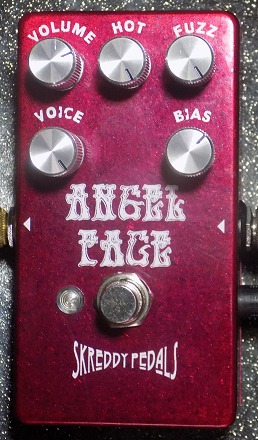
The Angel Face is specifically voiced for humbuckers — solving the most common complaint about Fuzz Face circuits (that they sound muddy with anything other than single coils). It retains all the warm, round character while adding enough clarity for Gibson and PRS players to enjoy the party.
Silicon: The Modern Standard
Silicon transistors replaced germanium in the late 1960s for practical reasons: they were cheaper, more consistent, and didn't care about temperature. But they also sounded fundamentally different.
- Higher gain — More amplification means more sustain and a more aggressive character (typically a stronger high-midrange voicing)
- Harder clipping — The distortion is of a more "buzzy," aggressive nature
- Consistent behavior — Temperature and humidity don't affect the sound
- Higher headroom — They can handle hotter signals without swamping out or sagging
Silicon fuzzes are louder, more aggressive, and more reliable. They cut through a band mix with authority and deliver consistency that germanium circuits can't match.
The Lunar Module: Silicon Perfection
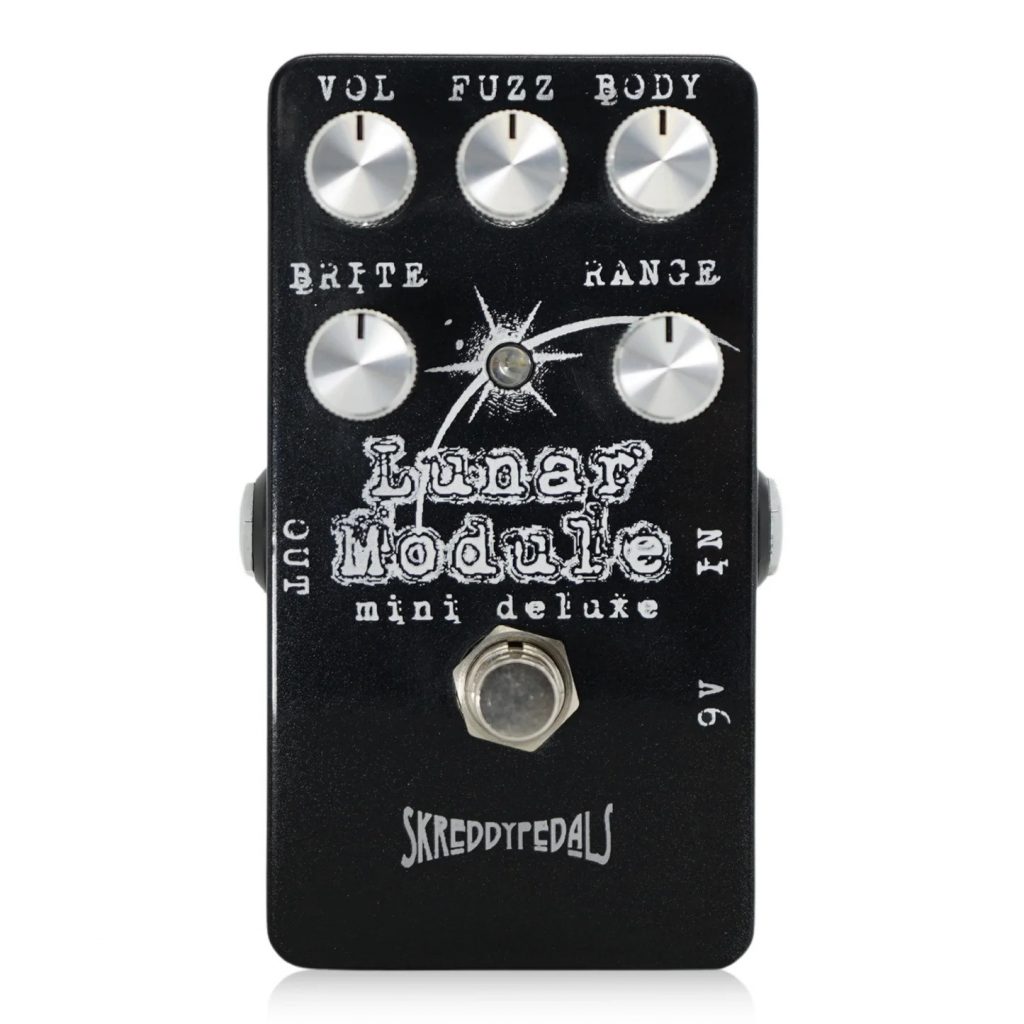
The Lunar Module Mini Deluxe is considered by some to be the best dirt pedal ever made. A versatile, aggressive silicon fuzz that covers enormous tonal ground. From subtle grit to face-melting sustain, it handles everything with authority.
This is the pedal that proves silicon fuzz isn't just "the practical choice" — it can be transcendent.
The BC109: Psychedelic Power
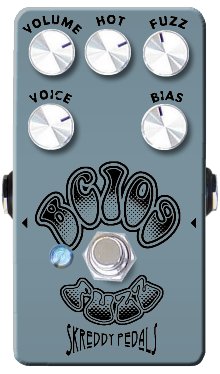
The BC109 Fuzz uses the legendary BC109 transistor — the same component found in countless vintage fuzz circuits from the late 60s and early 70s. High gain, ripping, and full of harmonic content. This is the sound of Hendrix at Woodstock, raw and untamed.
The Real-World Differences
Here's what actually matters when you're playing through each type:
Volume Cleanup
Germanium: Clean up happens rather suddenly between guitar volume on "10" and guitar volume on "7", making it difficult to find just the exact sweet spot.
Silicon: Much more gradual cleanup over nearly the entire range of the guitar's volume control — much less touchy and easier to find the desired sweet spot, although the total degree of cleanup is typically less than pristine compared to germanium — a little grit usually remains. Again, Skreddy Pedals uses silicon throughout their range of pedals, even those designed to emulate the early germanium circuits.
Sustain
Silicon wins. If you want notes to sing and sustain endlessly, silicon transistors deliver more gain and therefore more sustain. For lead players, this is often the deciding factor.
Playing Feel
It depends on what you want. Germanium feels squishier and more responsive — like the pedal is breathing with you. Silicon feels tighter and more predictable. Neither is better; they're genuinely different instruments.
Reliability
Silicon wins decisively. Germanium transistors drift with temperature, and finding matched pairs is increasingly difficult. Modern boutique builders like Skreddy Pedals spend considerable effort hand-selecting germanium transistors — which is why boutique germanium fuzzes cost more than their silicon counterparts.
Which Should You Choose?
Stop overthinking the germanium-vs-silicon debate. The real question is simpler: do you want lower gain or higher gain?
- Lower gain (warm, dynamic, touch-sensitive): Start with the Angel Face, ROVER, or Martian Tarantula. These use low-gain silicon transistors selected to deliver that vintage germanium feel — the warmth and cleanup without the instability. Perfect for classic rock, blues, and psych.
- Higher gain (aggressive, sustaining, cutting): Start with the Lunar Module or BC109 Fuzz. These are full-power silicon designs built for maximum sustain and harmonic content. Perfect for heavy rock, modern fuzz, and shoegaze.
- You want one fuzz that does everything: The Lunar Module Mini Deluxe covers more ground than any other single fuzz pedal.
Every Skreddy fuzz uses silicon transistors — the difference is how those transistors are selected and biased. Lower-gain models give you the vintage feel; higher-gain models give you modern power. The best fuzz pedal is the one that makes you not want to stop playing.
Pedals Mentioned in This Article