Why Fuzz Confuses Everyone
Overdrive is straightforward. Delay is logical. But fuzz? Fuzz is a different animal, and it confuses beginners for a simple reason: there is no single "fuzz sound." There are three distinct circuit families that all get called "fuzz," and they sound radically different from each other.
Buy the wrong one for your music and you'll spend weeks wondering why your pedal sounds nothing like your favorite records. Buy the right one and you'll never want to turn it off.
This guide cuts through the confusion. By the end, you'll know exactly which type of fuzz belongs on your pedalboard.
The Big Split: Silicon vs Germanium
Before we get into circuit families, you'll run into constant debate about transistors — the little components inside every fuzz pedal that actually create the distortion. Every forum thread about fuzz eventually becomes an argument about silicon versus germanium.
Here's the short version:
- Germanium transistors — Used in all vintage fuzz pedals from the 1960s. Warmer, more dynamic, and touch-sensitive. They clean up beautifully when you roll back your guitar's volume knob. The catch: they drift with temperature and are expensive to source reliably.
- Silicon transistors — Replaced germanium in the late '60s. More aggressive, more sustain, and completely reliable. Temperature and humidity don't affect them at all.
The practical insight most guides miss: the best modern boutique builders use carefully selected low-gain silicon transistors to replicate the warmth and dynamics of vintage germanium circuits — without the instability and noise problems. You get the vintage sound without the vintage headaches.
Want the full technical breakdown? Read our deep dive: Why Germanium vs Silicon Matters in Your Fuzz Pedal.
The Three Fuzz Families
Here's what nobody explains clearly enough: the three classic fuzz circuit families sound completely different from each other. Knowing which one matches your music is the single most important buying decision you'll make.
1. The Fuzz Face — Warm, Dynamic, Musical
The Fuzz Face was born in London in 1966. It's a two-transistor circuit with a warm, rounded, vocal quality. The most important thing about a Fuzz Face is how it cleans up: when you roll back your guitar's volume knob, a Fuzz Face goes from full fuzz to a surprisingly clean, almost-unaffected tone. This volume-knob interaction is unmatched by any other fuzz circuit.
Fuzz Face circuits are touch-sensitive and expressive. They reward good technique and make your picking dynamics feel like they matter.
Fuzz Face sounds like: Hendrix, early Eric Clapton, David Gilmour's earlier recordings, Gary Moore. Blues, classic rock, anything where the guitar needs to breathe and sing.
The catch: Standard Fuzz Face circuits are famously picky about what comes before them in your signal chain. They work best directly after the guitar with no buffers between — a technical quirk that surprises many beginners.
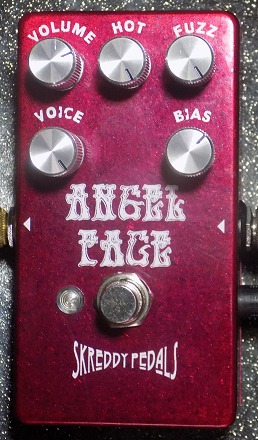
The Angel Face solves the biggest real-world problem with Fuzz Face circuits: it's specifically voiced for humbuckers. Standard Fuzz Faces often sound muddy with anything except single-coil pickups. The Angel Face retains all the warm, dynamic character while working with any guitar. If you have a Les Paul, SG, or any Gibson-style guitar, this is your starting point.
2. The Big Muff — Thick, Sustaining, Layered
The Big Muff Pi arrived in 1969 and changed everything. Where the Fuzz Face is simple and dynamic, the Big Muff is massive. Four cascading gain stages create a thick, sustaining fuzz that doesn't clean up when you roll back your volume — it just gets quieter while staying saturated.
Big Muff circuits are about sustain. Notes bloom and sing for what feels like forever. The characteristic mid-scoop (a frequency cut in the middle of the spectrum) creates space for vocals and other instruments while the fuzz fills the space above and below.
Big Muff sounds like: David Gilmour (later recordings), Smashing Pumpkins, Dinosaur Jr., My Bloody Valentine, pretty much all of shoegaze and grunge. Any style where you want maximum sustain and thickness.
The catch: That mid-scoop can make rhythm playing indistinct in a band context. Big Muff circuits are built for lead and texture, not for cutting through a mix on rhythm guitar.
There are several distinct Big Muff eras, each with its own character. The triangle-era originals (1969–1973) are warm and expressive, with a gritty, amp-like character. The rams head era (1973–1977) has more gain and sweetness. The Russian variants (1990s) are thicker and woolier. For a complete breakdown: The Big Muff Story: From NYC Sidewalks to Your Pedalboard.
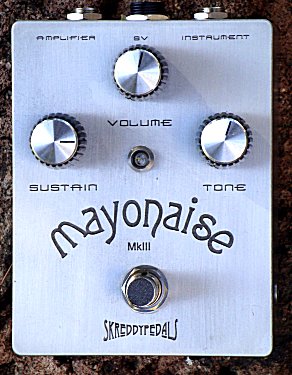
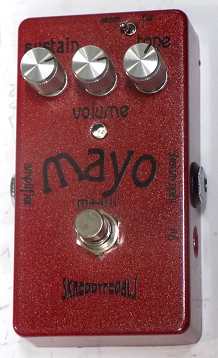
For a first Big Muff, the Mayonaise MkIII — a meticulous reissue of the triangle-era sound — is the ideal starting point. It retains more subtlety than later variants, which makes it more versatile for players who aren't trying to create a wall of fuzz on the one hand or focused articulation on the other. Rich, creamy sustain without the sometimes overpowering nature of later versions — the perfect balance and the most generally useful Big Muff type.
3. The Tonebender — Aggressive, Cutting, British
The Tonebender is the least-known of the three classic families, but it's the one that defined an entire era of British rock. Built in the mid-1960s, Tonebender circuits are more aggressive than Fuzz Faces — more gain, more sustain, and a forward presence that cuts through a band mix in a way the other circuits don't.
Tonebender sounds like: Jeff Beck, Jimmy Page (early Zeppelin), the Rolling Stones, Syd Barrett, Pete Townshend. Hard rock, British blues-rock, and classic psych.
The MkII Tonebender — the most popular version — delivers high gain with tons of sustain and that unmistakable forward British character. The earlier MkI takes it even further: spittier, more gated, more raw.
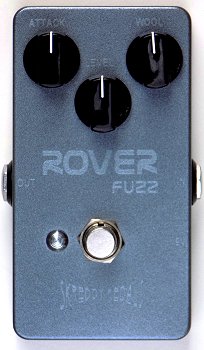
The ROVER Fuzz captures the Tonebender MkII with modern reliability. This is the circuit that gave British rock its backbone — aggressive and cutting without the mud problems of Big Muff circuits. For players who want a fuzz that fights for space in a band mix, this is the one.
What to Listen For in Demos
When you're watching YouTube demos trying to choose a fuzz pedal, most of them sound great. Here's what actually matters:
Attack
How does the note start? Fuzz Faces have a more natural, instantaneous attack — the note speaks immediately. Big Muff circuits have a slightly slower, more "blooming" attack where the sustain swells up. Tonebenders are sharp and immediate, almost more percussive. Listen for which feels right with your picking style.
Sustain
How long does the note ring? Big Muffs win this — they sustain longer than anything else. Fuzz Faces are more dynamic, with sustain that responds to how hard you pick. If you want notes that sing for days, listen for how long demo notes ring before they decay.
Cleanup
Does the demo show what happens when you roll back the guitar's volume knob? This is the most revealing test of any fuzz pedal. A good Fuzz Face-style circuit will go from full fuzz to nearly clean. Big Muff-style circuits will stay fuzzy regardless. Watch for demos that actually demonstrate this — it tells you everything about how expressive the pedal will be in practice.
Stacking
Does the demo show the fuzz going into another drive pedal? Fuzz pedals generally want to be first in the signal chain. If you plan to stack your fuzz with an overdrive, listen for demos that show this — not all fuzzes stack well, and the ones that do tend to advertise it.
Skreddy Recommendations by Playing Style
Informed by twenty-plus years of fuzz obsession, here's where to start, depending on how you play:
Blues & R&B
You want a Fuzz Face-style circuit. Dynamic, touch-sensitive, and expressive. The Angel Face is the choice — specifically tuned for humbuckers so it works with any guitar in your arsenal. Roll the guitar volume back for almost-clean tones; dig in for full fuzz. The interaction between the pedal and your guitar's volume knob will change how you play.
Classic Rock
Depends which era. For British crunch-fuzz (Zeppelin, Stones, early Sabbath), the ROVER Fuzz gives you the Tonebender MkII sound that powered that entire era. Forward, cutting, aggressive without losing note definition. For a more versatile option that covers classic rock through psych, the Mayonaise MkIII handles rhythm and lead with equal grace.
Shoegaze & Ambient
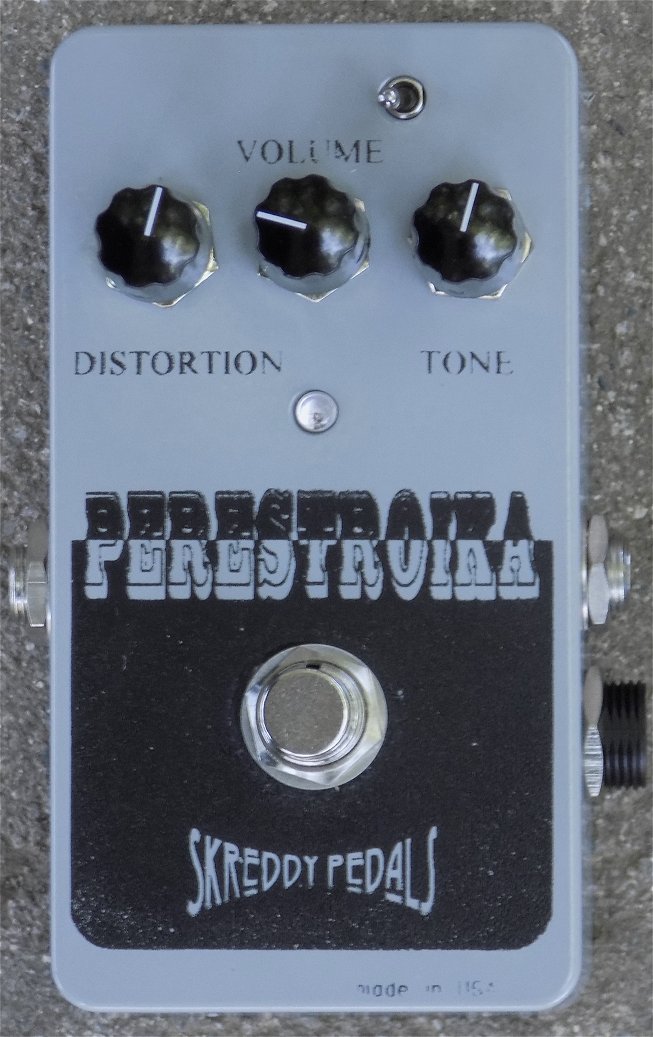
Big Muff territory. You want maximum sustain and the ability to bury your tone in reverb without it disappearing. The Perestroika captures the Russian-era circuit that defined shoegaze — thick, scooped, and relentless. Stack it with a shimmer reverb and a long delay and you'll understand immediately why this circuit has appeared on every shoegaze record since the early 1990s.
Psychedelic & Garage
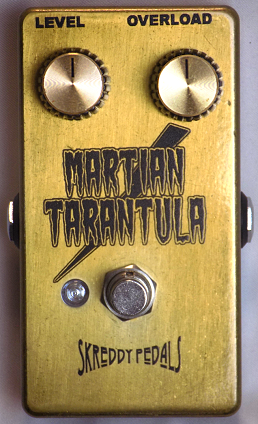
The Martian Tarantula is the answer. A reissue of the Tonebender MkI — the rarest, most aggressive variant. Spitty, gated, and full of wild character. This is the sound of Mick Ronson and the early psych explosion. It's not subtle.
All-Around First Fuzz (Not Sure Yet)
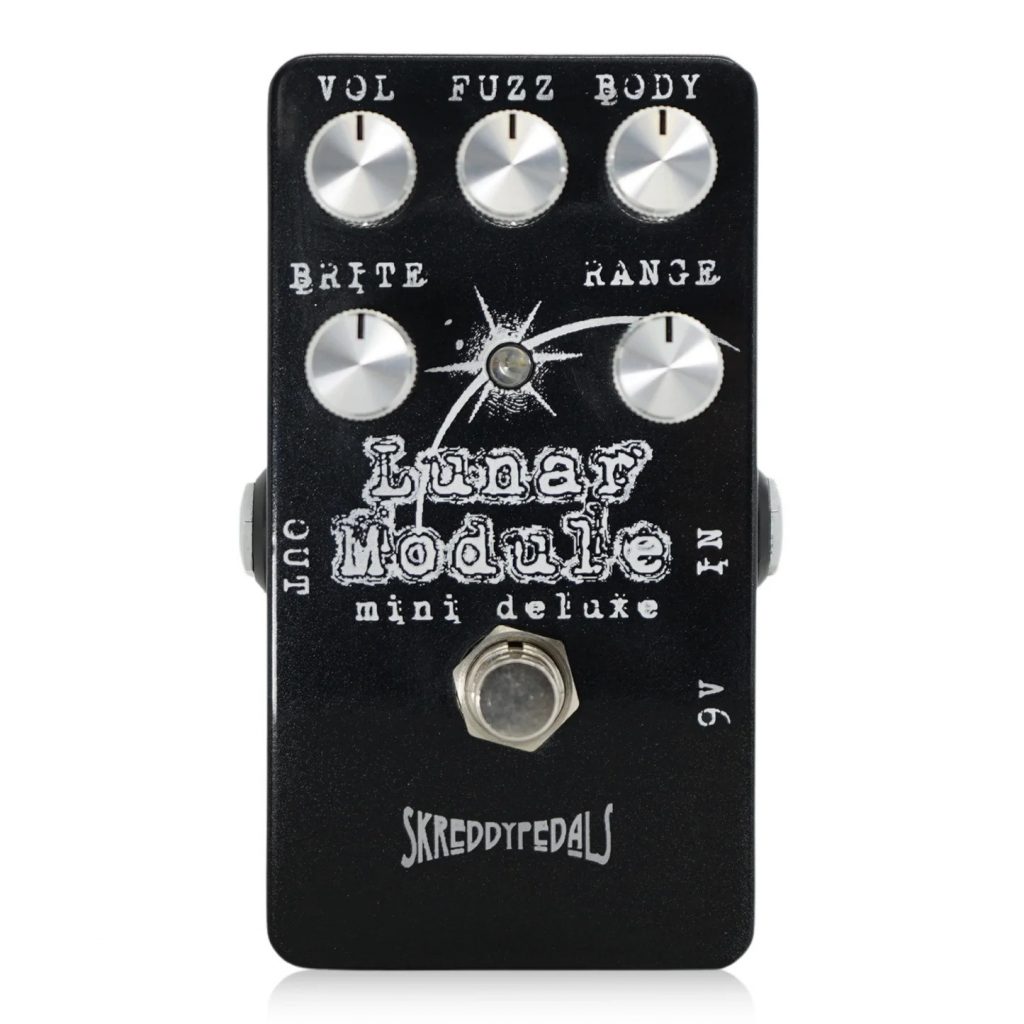
If you're genuinely unsure which direction your playing will go, the Lunar Module is the most versatile fuzz Skreddy makes. A silicon circuit with enormous range — from subtle grit to face-melting sustain. It's the pedal that proves silicon fuzz isn't a compromise; it can be transcendent. If you only buy one fuzz, buy this one and add specialized circuits later as your tastes develop.
The "Start Here" Answer for Each Genre
| Genre | Pedal | Why |
|---|---|---|
| Blues | Angel Face | Fuzz Face warmth, works with any pickup type |
| Classic Rock | ROVER Fuzz | Tonebender MkII — the British rock foundation |
| Shoegaze | Perestroika | Russian Muff thickness, built for reverb-heavy layering |
| Psych / Garage | Martian Tarantula | Tonebender MkI — raw, spitty, wild |
| Not Sure Yet | Lunar Module | Widest range of any single fuzz — covers everything |
One More Thing: Where Fuzz Goes in Your Chain
Fuzz pedals generally want to be first in your signal chain, right after your guitar. This isn't a rule — it's physics. Fuzz circuits react to the raw impedance of your guitar pickup. Put a buffer (like a tuner pedal or most Boss pedals) before your fuzz, and you may notice it sounds different than the demos.
If you use a lot of buffers and don't want to restructure your board, look for fuzzes that are explicitly "buffer friendly." Most modern boutique builds handle buffered signals fine — just something to know before you wonder why yours sounds slightly off.
The rest of the signal chain: drive pedals after fuzz, modulation after drive, delay and reverb last. For a complete guide to building your first pedalboard: Building Your First Boutique Pedalboard.
The Bottom Line
Fuzz isn't complicated once you understand the three families. Fuzz Face for warmth and dynamics. Big Muff for sustain and thickness. Tonebender for aggression and cut. Every fuzz pedal on the market is a variation on one of these three DNA strands.
Pick the family that matches your music, then find the best version of that family. Don't buy based on demos alone — the guitarist playing sounds good regardless of the pedal. Buy based on which circuit architecture matches what you're trying to do.
If you're still not sure? Get the Lunar Module and explore from there. It's the fuzz that teaches you what you actually want.
Pedals Mentioned in This Article