The Circuit That Launched a Thousand Bands
The Big Muff Pi is arguably the most important fuzz circuit ever designed. Not because it was first — the Fuzz Face and Tonebender came before it. Not because it was the best-selling — mass-produced tubescreamers sold far more units. But because its architecture became the template for an entire category of guitar effects.
Four gain stages. Clipping diodes. A tone stack that shapes the frequency response between "scooped" and "mid-forward." This is the DNA that runs through shoegaze, grunge, stoner rock, and progressive rock. Understanding its history helps you understand what makes each variant special.
The Triangle Era (1969-1973)
The earliest Big Muffs had triangular knob layouts and relatively modest gain by modern standards. They were warmer, more organic, and had more of an amp-like lushness, grit, and paradoxically more transparency than later versions.
These originals now sell for thousands of dollars on the vintage market — not because they sound dramatically better, but because they're rare. The magic of the triangle era is largely due to the particular transistors used in that era: a house-branded version in the family of 2N5133, which possesses a gritty, soft tone; and all of the signal capacitors of that era were ceramic disc types, which are also a softer sounding capacitor type with a musical rolloff of both low and high end, as compared to the more linear response of modern film capacitor types.
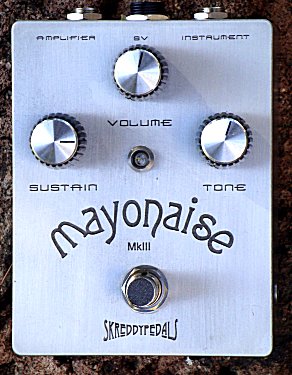
The Mayonaise MkIII is a faithful reissue of this first-era sound. It's where the Skreddy Pedals story began over 20 years ago — Marc Ahlfs' original fuzz pedal, refined through three iterations. Rich, creamy sustain with that unmistakable triangle-era character, because it uses the original parts types.
This is where the Skreddy story began. Over 20 years of fuzz obsession, starting with this circuit.
The Rams Head Era (1973-1977)
The "rams head" era gets its name from the ram's head graphic on the enclosure. There is no single "sound" that can be said to define the ram's head era, since that was a time in EHX production history that saw the most variations.
The early versions were very much like the triangle-knobs, but typically different capacitors began to be used, and then, later, different transistors, like the 2N5088, the 2N5087 (which required a reverse-polarity power supply), and BC239.
The model year 1976 was the version of Big Muff Pi that had the tone stack configuration with the least amount of mid scoop over the total production years; this is the era most associated with David Gilmour's lead tone, which, unlike the prototypical "Big Muff" sound, was not muddy, overly-scooped, or boomy, but was actually articulate, with a sweet-sounding sustain that allowed thet strings to breathe.
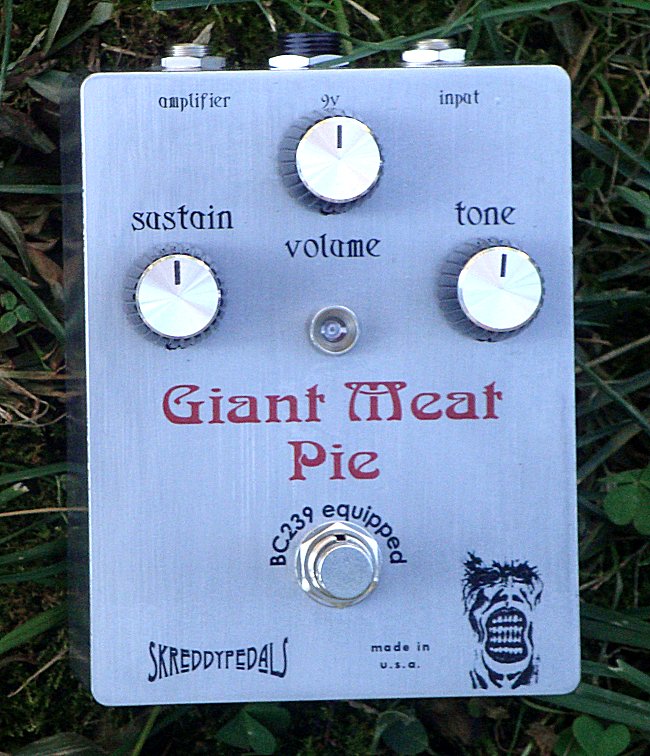
The Giant Meat Pie BC239 captures this era using select BC239 transistors and high-quality film capacitors for extra sweetness and remarkably low noise. Based on the circa-1976 circuit, it delivers the classic sustaining fuzz sound with studio-quality refinement.
Before the Muff Got Famous
Here's something most players don't know: the very earliest Big Muffs — the 1971 originals — had some variability in the transistors such that some specimens had less gain just by sheer chance. They were warmer, more amp-like, and closer to a cranked amplifier than a "fuzz pedal."
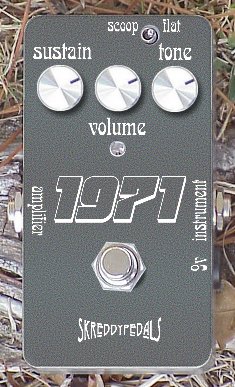
The 1971 captures exactly this character. Vintage amp-like, lower-gain muffy distortion. It's warmer and more musical than the high-gain versions, and it's an absolute revelation for players who think they "don't like muffs."
If you've been put off by the aggressive, scooped character of modern Big Muff clones, try this one. It might change your mind about the entire circuit family.
The Russian Chapter (1990s)
When production moved to Russia in the early 1990s, everything changed. Different components, different manufacturing processes, different sonic character. The Russian variants were thicker, woolier, and had more low-end content.
Shoegaze and grunge musicians discovered these immediately. The thick, scooped sound was perfect for layering with reverb and delay — exactly what the emerging shoegaze movement needed. Many people wrongly assume that the Russian version had less of a mids scoop, but in reality, they scoop the mids very strongly--it's just that the frequency of the scoop is at a higher point than the others, leaving more of the low-mids intact. But the increased low end is not a myth; this version used a smaller capacitor in series with their clipping diodes, which means that the low end is not smashed as much and so remains strong in the output.
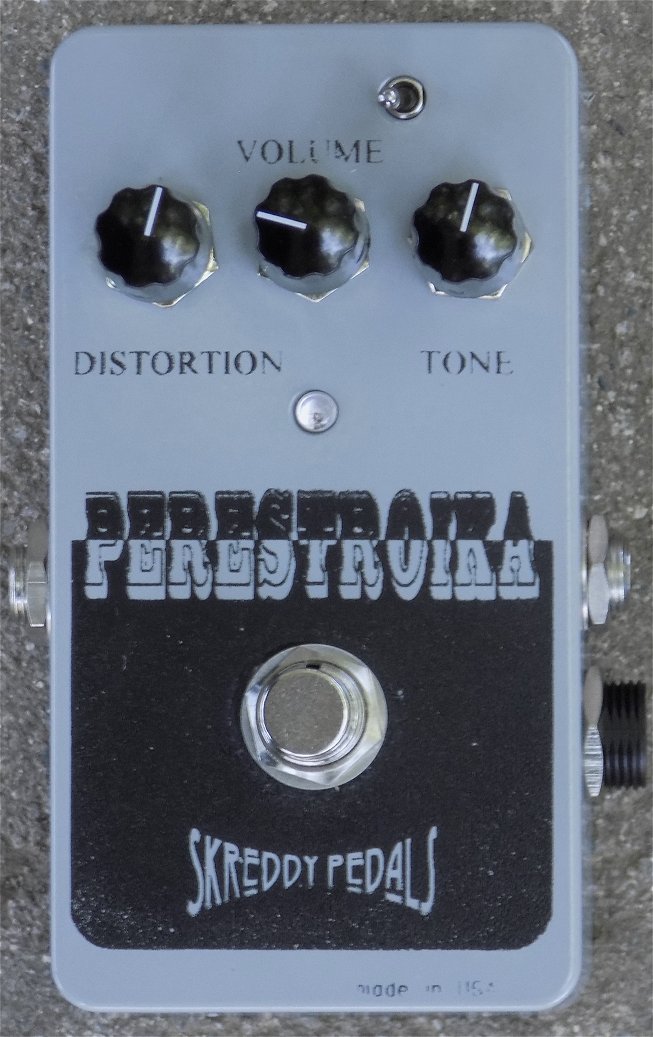
The Perestroika captures this era perfectly. Early 90s Russian muffy distortion — fat, scooped mids, and endless sustain. The foundation sound of shoegaze and grunge in a single pedal.
The Modern Era: Why Boutique Versions Win
Here's the uncomfortable truth about vintage Big Muffs: quality control was terrible. Two units from the same production run could sound completely different. Component values and types and tolerances varied, and many "legendary" vintage units sound legendary partly because of survivorship bias — the good ones got famous, the bad ones got thrown away.
Modern boutique builders have a massive advantage: they can select specific component values, test individual transistors, and dial in the exact circuit behavior they want. The result is pedals that consistently sound as good as the best vintage examples — every single time.
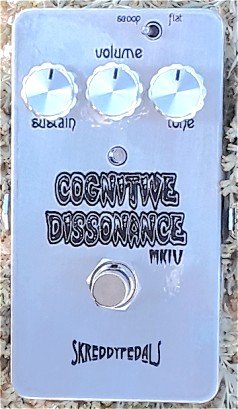
The Cognitive Dissonance MkIV represents this modern approach at its best. Four iterations of refinement have produced one of the silkiest, most refined fuzz pedals available. It walks the line between fuzz and distortion with grace, delivering singing leads and thick rhythm tones consistently, and it gets along with humbuckers better than most vintage versions while maintaining a great articulation and wonderful balance.
Which Era Is Right for You?
- Triangle era (Mayonaise MkIII): For players who want warm, organic fuzz with moderate gain. Classic rock, progressive rock, and players who value note definition
- Pre-fame era (1971): For players who think they don't like muffs. Lower gain, more amp-like, incredibly musical
- Rams head era (Giant Meat Pie BC239): For lead players who want singing sustain. The Gilmour sound. Studio-quality tone
- Russian era (Perestroika): For shoegaze, grunge, doom. Thick, woolly, and perfect for layering
- Modern refined (Cognitive Dissonance MkIV): For players who want the best of all eras in one pedal
The beauty of the Big Muff circuit is that each era sounds genuinely different. They're not slight variations — they're distinct instruments with distinct characters. Any serious fuzz collection needs at least two.
Pedals Mentioned in This Article