Delay Is Not Just Repeats
Most guitarists think of delay as a tool for adding echo — a slap back here, a rhythmic repeat there. For ambient and shoegaze players, that framing misses the point entirely. Delay is the texture. It's the space between notes, the shimmer that makes a chord feel like it's dissolving into air, the wash that turns a single sustained note into something that fills a room.
Listen to any classic shoegaze track — My Bloody Valentine's Sometimes, Slowdive's Alison, Ride's Vapour Trail — and the delay isn't an effect. It's the fabric of the sound. The guitar isn't sitting in a mix; the delay is the mix. And for ambient players, long-trail delays running into reverb can sustain a single chord for forty seconds of evolving movement without a single additional note.
That's a fundamentally different job than "add some depth to a lead line." Getting there requires understanding what delay actually does to a signal, which type of delay circuit gets you to those textures fastest, and how to dial in the parameters that matter.
Analog vs. Digital vs. Tape Delay: What Actually Sounds Different
The debate between analog and digital delay is one of the most overstated arguments in guitar gear — until you're specifically chasing ambient or shoegaze tones, at which point it becomes one of the most important ones.
Analog Delay (BBD)
Analog delay uses Bucket Brigade Device (BBD) chips — a chain of capacitors that passes the signal from stage to stage, introducing small amounts of noise, frequency roll-off, and modulation at each stage. The repeats are warmer and darker than the dry signal, and they degrade gently with each repeat. The fourth echo of a chord sounds noticeably different from the first — softer, hazier, dissolving rather than cutting.
This degradation is not a flaw. For ambient and shoegaze, it's the entire point. You want repeats that feel like they're receding into space, not crisp digital copies stacking on top of each other. Analog repeats blend with the dry signal instead of competing with it. They thicken the low-mids while rolling off the high frequencies that would otherwise create a harsh pile-up at high feedback settings.
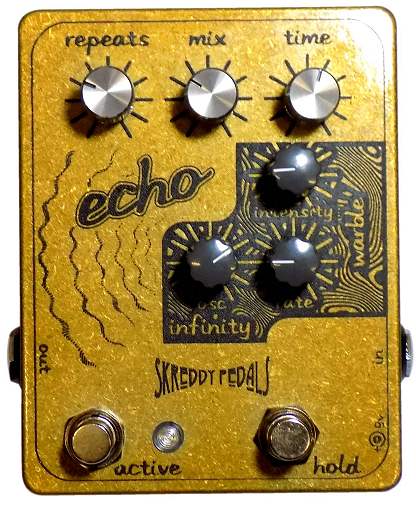
The Skreddy Echo Infinity ($338) is built around analog BBD chips specifically for this reason. Its repeats are warm and progressively degraded — each echo sits slightly behind the previous one, creating a sense of depth rather than volume. At high feedback settings, it builds into a self-oscillating wash that stays musical instead of turning into harsh digital noise. That's what analog BBD chemistry actually sounds like in practice.
Digital Delay
Digital delay captures the signal as a binary sample and plays it back with near-perfect fidelity. The repeats are as bright and clear as the dry signal. This is ideal for precise rhythmic delay work — dotted-eighth patterns, tempo-synced slapback, polyrhythmic stacking — where you want each repeat to punch clearly through the mix.
For ambient textures, digital delay can feel clinical. The repeats don't recede; they persist with the same presence as the dry signal. That makes high-feedback settings harder to work with — they build fast and get aggressive. Some digital delays add modulation or filtering to simulate the warmth of analog, with varying results.
Tape Delay (and Tape Emulation)
Vintage tape delays like the Echoplex and Roland RE-201 Space Echo used actual tape loops, which introduced wow and flutter (pitch instability), frequency saturation, and a sonic character that digital emulations have spent decades trying to recreate. The warmth is similar to analog BBD — repeats that feel like they exist in a slightly different acoustic space from the dry signal. Tape delay is rare as hardware now, but the sonic signature — saturated, slightly pitch-unstable, harmonically rich repeats — remains influential on everything from David Gilmour's solos to the entire ambient electronic genre.
For shoegaze and ambient specifically: analog BBD delay is the most direct route to those textures without the maintenance and unpredictability of actual tape.
The Four Parameters That Actually Matter for Ambient Tone
Most delay pedals have time, feedback, and mix controls. Some add modulation. Here's what each one does to your ambient texture and how to use them deliberately.
Delay Time
Delay time sets the gap between your dry signal and the first repeat, measured in milliseconds. For ambient and shoegaze, longer times — 300ms to 800ms and beyond — create the spacious wash that defines the genre. Times below 100ms produce slapback (rockabilly, early rock) or chorus-like doubling. Around 150–250ms is the sweet spot for rhythmic work at moderate tempos.
For a dotted-eighth ambient feel at 120 BPM, you want approximately 375ms (1000 ÷ 120 × 1.5 = 750ms ÷ 2 = 375ms for dotted-eighth at that tempo — more on this below). For long-trail ambient pads, push to 600–800ms and let the repeats build into texture rather than rhythm.
Feedback
Feedback controls how many repeats you get before the signal decays to nothing. Low feedback (20–30%) gives you 2–3 audible echoes — clean and controlled. Medium feedback (40–60%) gives you a longer trail with natural decay. High feedback (70–90%) builds repeats that sustain for several seconds and start to compound on each other, creating density. Above 90%, most delays enter self-oscillation — the repeats feed back into themselves and build into a wall of sound.
For ambient, learn to work with medium-to-high feedback (50–80%) combined with longer delay times. The echo trail becomes part of the sustained texture rather than a rhythmic effect. For shoegaze walls, controlled self-oscillation at 90%+ feedback is a production choice, not an accident.
Modulation
Many quality delay pedals add subtle modulation to the repeat path — a low-rate, low-depth chorus-like movement that makes the repeats feel "alive" rather than static. On analog BBD delays, this can come from the natural instability of the chip itself. On pedals with a dedicated modulation circuit, a slow LFO adds gentle pitch movement to each repeat.
For ambient playing, modulation transforms a static repeat wall into something organic and evolving. Even a small amount — depth at 20%, rate at a slow 0.5Hz — makes the difference between a delay texture that sounds mechanical and one that breathes. The Echo Infinity's modulation section is specifically voiced for this: subtle enough to stay musical, present enough to give repeats their characteristic shimmer.
Trails (Spillover)
Trails refer to what happens when you switch the delay off. A delay without trails cuts abruptly — the repeats disappear the moment you bypass the pedal. Trails mode lets the existing repeats continue to decay naturally after you've turned the effect off. For ambient and live use, this is critical: you want to be able to move from a delay-drenched texture back to a clean signal without a jarring cut.
Always confirm trails behavior before buying a delay for ambient use.
Echo Infinity: Analog BBD Delay Built for This
The Skreddy Echo Infinity ($338) is not a general-purpose delay. It's a deliberate design choice for players who want analog warmth, modulation, and musical self-oscillation — the full toolkit for ambient and shoegaze textures.
Its BBD chip topology produces repeats that roll off progressively in high frequency content with each echo. By the third or fourth repeat, the signal has lost enough top-end that it sits naturally below the dry signal, creating depth rather than mud. At high feedback settings, the self-oscillation stays warm and musical — it builds into a wash, not a shriek.
The modulation circuit adds subtle, organic movement to the repeats. It's the difference between stacking identical copies and building something that feels like sound traveling through physical space. Turn the modulation up slightly, set feedback at 70%, and let a single chord sustain: the repeats evolve, shift, and shimmer in ways that no clean digital delay replicates.
For David Gilmour's long-decay solo tones — the very definition of delay as melody rather than effect — see the full breakdown in How to Sound Like David Gilmour. Gilmour's approach to delay is the foundation of modern ambient guitar technique.
Signal Chain Placement for Delay
Where delay sits in your signal chain determines how it interacts with everything else on your board. The conventional placement is after drive pedals, before reverb. This means your fuzz or overdrive shapes the tone first, and the delay repeats that shaped tone — which is generally what you want. Putting delay before a fuzz causes the fuzz to distort the repeats differently with each echo, which can sound interesting but unpredictable.
For ambient and shoegaze, a common approach is:
- Fuzz / overdrive (shaping the source tone)
- Modulation (phaser, chorus — color the sound before delay captures it)
- Delay (creates the textural repeat wash)
- Reverb (adds final spatial dimension to the delay trail)
This puts delay after modulation, meaning the repeats contain the modulated signal — each echo shimmers with the phaser or chorus already baked in. Running delay into reverb (rather than reverb into delay) means the reverb surrounds the entire delay texture, including the trails, which tends to sound more cohesive for ambient applications.
For a full breakdown of placement logic for every pedal type, see Guitar Pedalboard Signal Chain Order.
Three Ambient Delay Settings to Start With
These settings are starting points — they'll sound different on your rig, with your guitar and amp. Use them as baselines to dial in from, not templates to copy exactly.
1. Shoegaze Wall (Dense, Self-Reinforcing Texture)
This is the foundation of the classic shoegaze sound: delay and distortion working together to create a wash that sustains longer than any note naturally could.
- Delay time: 450–550ms
- Feedback: 75–85%
- Mix: 50–60% (delay close to equal with dry signal)
- Modulation: low rate (0.5–1Hz), medium depth
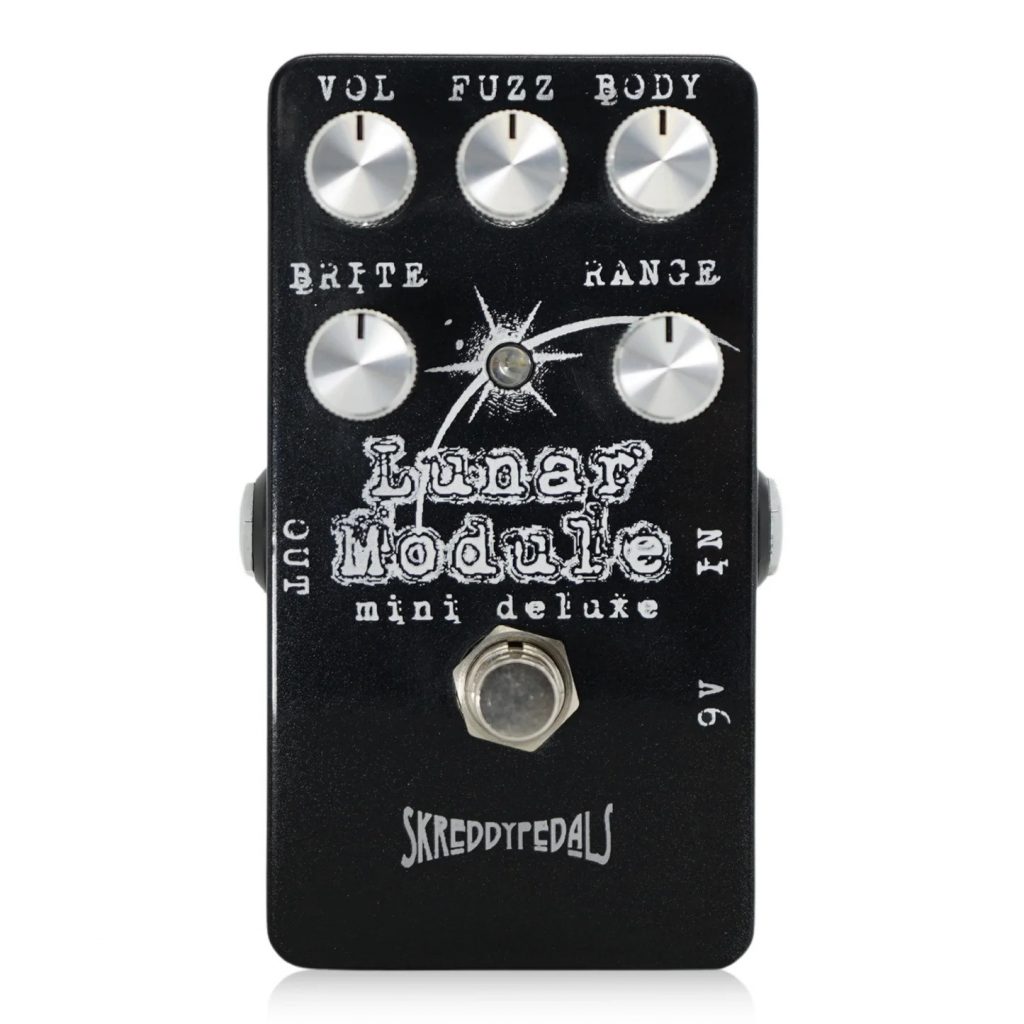
- Fuzz pairing: Lunar Module into Echo Infinity — the fuzz wall runs into the delay, and the repeats sustain the compressed fuzz character long after the note would have decayed naturally
Play single chords or two-note power voicings. Let the repeats build. Don't rush to the next chord — the texture needs time to develop. When you move, the old chord's repeats and the new chord's dry signal overlap, which is the shoegaze sound.
2. Dotted-Eighth Ambient (U2 / Post-Rock Pattern)
The dotted-eighth delay trick — where the repeat falls between beats and creates an implied rhythm that doesn't match the original — is used everywhere from Edge's ambient lead lines to modern post-rock. At 100 BPM, the dotted-eighth timing is 450ms. At 120 BPM, it's 375ms.
- Delay time: 375ms (120 BPM) or 450ms (100 BPM)
- Feedback: 35–45%
- Mix: 30–40% (delay supporting, not overwhelming, the dry signal)
- Modulation: minimal or off
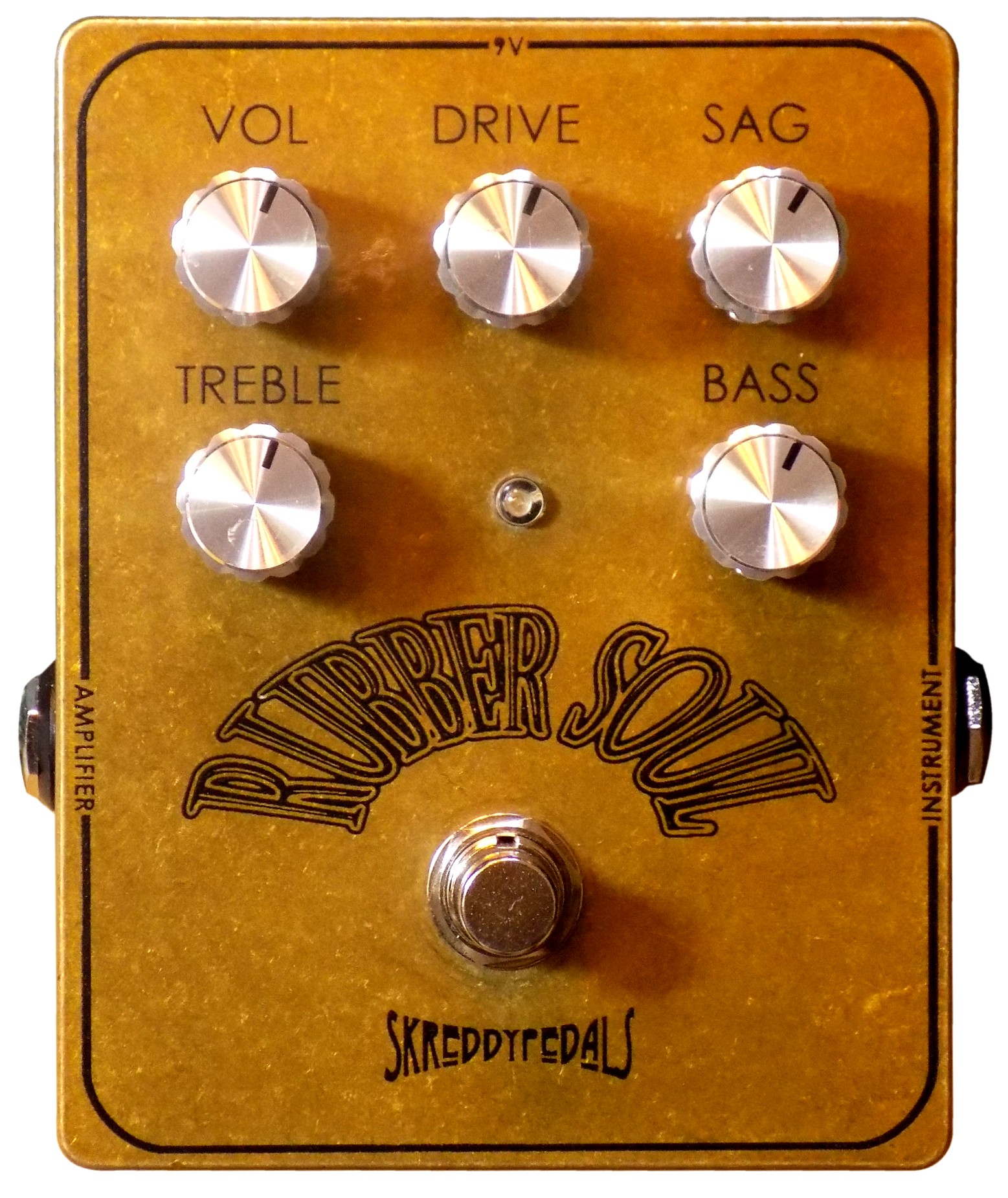
- Drive pairing: Rubber Soul into Echo Infinity — clean overdrive into delay keeps the pattern articulate while the analog repeats add warmth
Play a single-note line or arpeggiated chords and let the delay rhythm do the harmonic work. The repeats fill the space between notes in a way that makes simple playing sound complex.
3. Long-Trail Pad (Drone, Sustained Chord Texture)
For fully ambient playing — where the guitar isn't a melody instrument but a texture generator — maximum delay time and near-self-oscillating feedback creates a sustaining pad that evolves over tens of seconds.
- Delay time: 700–800ms
- Feedback: 85–92%
- Mix: 60–70% (delay dominant)
- Modulation: high rate and depth — the repeats should have noticeable shimmer and movement
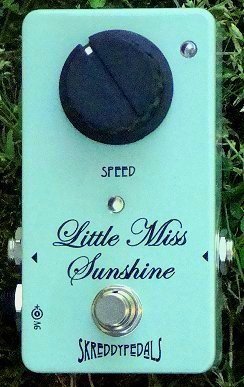
- Modulation pairing: Little Miss Sunshine (phaser) before Echo Infinity — the phase-shifted signal gets captured in the delay and the repeats carry both phase movement and delay modulation simultaneously
Strike a chord and let it sustain. Feedback at 90%+ will hold the texture for 20–30 seconds on its own. Add a second chord underneath the fading first one and layer textures. This is the ambient guitar technique in its purest form.
Combining Delay With Other Effects
Delay alone creates space. Combined with the right effects, it creates the wall of sound that defines both shoegaze and ambient guitar.
Fuzz Into Delay = Shoegaze
The classic shoegaze pairing. Fuzz (particularly silicon fuzz with compressed, sustaining character) into a long analog delay creates the signature sound: a sustained fuzz wall where the delay makes the texture feel infinite. The Lunar Module Mini Deluxe ($301) — Skreddy's silicon-voiced fuzz — into the Echo Infinity is exactly this pairing. The Lunar Module's lower-gain silicon transistors produce the warm, wall-of-fuzz quality that makes delay work with it rather than against it. For the full context on fuzz selection for this sound, see Best Fuzz Pedals for Shoegaze.
Phaser Into Delay = Lush Ambient
Running a phaser before delay means the delay captures the phased signal — each repeat has phase movement baked in. The Little Miss Sunshine ($301) into the Echo Infinity produces a shimmering, evolving texture that feels like the sound is expanding and contracting on every repeat. This is one of the most distinctive ambient guitar sounds available from two pedals. The David Gilmour "Sound Like" guide touches on this: Gilmour's use of phasing into long delay on Shine On You Crazy Diamond is foundational to that approach.
Overdrive Into Delay = Sustained Lead
A clean, transparent overdrive into analog delay is the classic David Gilmour technique — compressed, harmonically rich note sustain that carries indefinitely through the delay. The Rubber Soul ($290) into Echo Infinity replicates this: the overdrive shapes the fundamental character of the note, and the analog repeats sustain it with warmth. Set feedback at 60%, delay time at 450–600ms, and a single sustained bend becomes a conversation with itself.
For guitarists building direct rigs for recording, delay is particularly powerful without an amp in the chain — the effect sits in the signal cleanly without room acoustics complicating the blend. See Recording Direct: Why You Might Not Need an Amp for how to build a delay-heavy direct rig that translates well in a DAW.
What Makes Analog Delay the Right Choice for These Genres
There's a reason shoegaze and ambient guitarists consistently return to analog delay. It comes down to how the repeats interact with distortion and modulation at high feedback settings.
Digital delay at 85% feedback into a fuzz pedal can turn brittle and harsh — the clean, accurate repeats pile up with the same frequency content as the original signal, and the fuzz amplifies all of it. Analog BBD delay at the same setting builds warmth — each repeat is slightly darker and softer, so they compound into density rather than noise. The physical degradation built into the BBD process is the exact quality that makes high-feedback ambient playing work.
This is why the Echo Infinity uses BBD chips rather than digital processing. Marc Ahlfs (Skreddy) built it for the specific application where analog character isn't a nostalgic feature — it's the functional requirement.
All Skreddy pedals ship direct from Carson City, Nevada. Built by hand, one at a time.
Pedals Mentioned in This Article